
Throughout the Gospels, Jesus often heals in response to extraordinary faith. He marvels at the centurion (Matthew 8:10) and tells the suffering woman, “Thy faith hath made thee whole” (Mark 5:34).
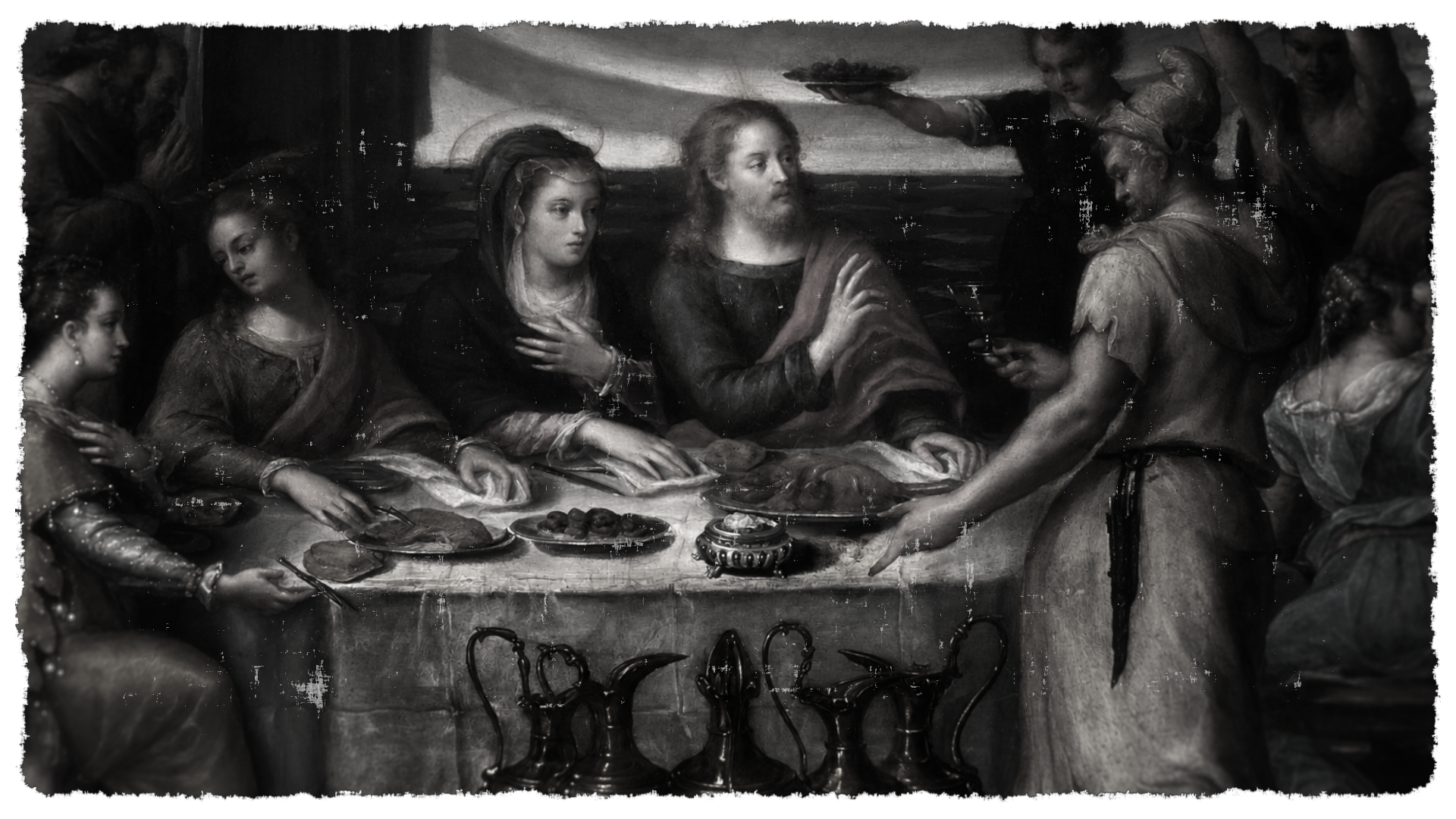
Yet at Cana, He performs a miracle without first praising anyone’s faith. In fact, His response to His mother seems almost discouraging. When Mary says, “They have no wine” (John 2:3), Jesus replies, “Woman, what is that to me and to thee? My hour is not yet come” (John 2:4).
Mary does not argue, plead, or attempt to persuade Him. Instead, she turns to the servants and says, “Do whatever he tells you” (John 2:5).
Even after His unexpected response, Mary has complete confidence in her Son.
And Jesus turns water into wine.
St. John identifies this as the beginning of Christ’s signs, through which He manifested His glory (John 2:11). At the threshold of that manifestation stands the extraordinary faith of His mother.
The Mother Who Remains
In our first essay, we examined why Mary is called the Mother of God, identifying the eternal Son who received His human nature from her. Our second explored how His extraordinary conception reveals the reality of the Incarnation.
What became of that relationship after Christ’s earthly life?
Earthly departure does not end motherhood, and even death does not erase the bond. In Mary’s case, the reality is unique: the Person she bore is the eternal Word, and the human nature He received from her remains His forever. He rose in the very human nature He received from His mother.
The glorified Christ is still the Son of Mary, and Mary is still His mother. That relationship belongs to His very identity, raising a vital question: what does her enduring motherhood mean for her relationship with Him now?
One Church, One Mediator
When the Sadducees denied the resurrection, Jesus answered by recalling God’s words at the burning bush, where He identified Himself as the God of Abraham, Isaac, and Jacob, centuries after their deaths. Jesus explains that God “is not the God of the dead, but of the living; for all live to him” (Luke 20:38).
Those who die in God’s friendship remain alive to Him. This is foundational to the communion of saints: death does not sever their union with Christ or the charity that binds them to fellow believers.
We already ask others to pray for us, trusting that their prayers can benefit us. Those in heaven remain members of Christ’s Body, and their love has reached perfection. They, too, can intercede for us. The intercessor asks; God alone grants.
But doesn’t Scripture say there is only one mediator? St. Paul writes, “For there is one God, and one mediator of God and men, the man Christ Jesus” (1 Timothy 2:5).
Notice the context. Only a few verses earlier, Paul urges Christians to pray and intercede for everyone (1 Timothy 2:1). Christ alone reconciles humanity to the Father through His sacrifice, but His mediation makes it possible for His members to pray for one another.
When we ask Mary to pray for us, we ask her to intercede with her Son, knowing that every grace comes from God through Christ.
But if every saint in heaven can intercede, what makes Mary’s intercession unique?
The Woman at Cana
Every saint in heaven is united to Christ. Mary, however, possesses a relationship to Him that belongs to no other creature.
She is His mother.
When Elizabeth greeted Mary as “the mother of my Lord” (Luke 1:43), she acknowledged something extraordinary: Mary bore the eternal Son of God made man.
Other saints intercede as members of Christ’s Mystical Body. Mary does so as a member of that same Body, and as the Mother of its Head. Her intercession therefore has a maternal character that no other saint’s can possess. She asks nothing independently of Christ, but she asks as His mother.
The Church’s special veneration of Mary reflects this unique dignity. Veneration means giving someone the honor due to them, much as we honor our parents or others worthy of particular respect. Such honor is not worship.
The veneration given to the saints is called dulia, from the Greek δουλεία (douleia), meaning service or servitude. Mary’s special honor is called hyperdulia, from ὑπέρ (hyper), meaning “above” or “beyond,” and δουλεία. Neither is latria, from the Greek λατρεία (latreia), meaning worship or religious service, which belongs to God alone. The distinction is one of kind, not merely degree. However highly Mary is honored, she remains a creature, and worship belongs to God alone.
Understanding this distinction helps avoid two opposite errors: exaggerating Mary’s place until she appears to rival her Son, or diminishing it by treating her as simply another saint, as though her divine maternity made no difference. She has no power to redeem, but she remains His mother when she intercedes for us.
At Cana, Mary brings others' needs before her Son and directs the servants to obey Him. The miracle is His alone. The scene does not establish the entire doctrine of Mary’s intercession, but it reveals something about the relationship on which that intercession rests.
When we ask Mary to pray for us, we turn to the Mother of the One who alone can save us.
And Mary's last words in the Gospels remain her counsel to us: “Do whatever he tells you.”
Subscribe to The Distant Shore so you don’t miss the weekly essays.
Editor’s Note: This is the third essay in a four-part series exploring the significance of Mary’s unique place in the Incarnation. The series considers her divine maternity, the Virgin Birth, her intercession, and her continuing place in the life of the Church, all beginning from a simple truth: God chose Mary, and that choice means something.