
Two errors have always waited for the disciple who takes politics seriously, and they wait on opposite sides of the road.
The first is withdrawal. If Christ’s kingdom is not of this world, and if the Church alone judges faith and morals, why not simply leave the political order to itself? Let Caesar have his taxes and his wars; the disciple has his eyes fixed on the next life, not this one. This temptation has recurred throughout Christian history in different disguises.
The second error runs in the opposite direction. If the disciple cannot leave politics alone, why not master it? Build the confessional state. Fuse throne and altar. Make temporal power the visible arm of the supernatural order. Throughout Christian history, men have repeatedly sought, through political power, what belongs only to grace, not a withdrawal from the political order this time, but its absorption into the Church’s own mission.
Both errors are, in their own way, attempts to escape a harder position. Neither is available to the disciple. Christ's kingdom is not of this world, yet every earthly kingdom remains subject to the moral law the Church proclaims. The question is no longer whether he belongs in the political order, but how he is to live within it.
Neither Fleeing Nor Ruling
The disciple is called to the full exercise of his civic duties: just laws, sound administration, and the ordinary work of the common good. That much withdrawal forecloses. He negotiates, compromises where conscience permits, and builds coalitions with others who do not share his faith.
Confessionalism forgets the opposite truth. It treats temporal power as though it existed to enforce belief rather than to secure the conditions in which belief may be freely lived. The political order has a genuine task of its own. It exists neither to save souls nor to replace the Church. But that does not make it irrelevant to them.
Scripture refuses to let the disciple settle into either error. “Seek ye therefore first the kingdom of God, and His justice” (Matthew 6:33) is not permission to neglect the ordinary responsibilities of public life. The same Gospel that commands the disciple to seek the kingdom assumes he remains at work in the world. And the same Lord who told Peter to put away his sword told Pilate that His kingdom was not of this world, a truth that has never justified the disciple abandoning the courts, the legislatures, or the ballot box.
The Discipline of Prudence
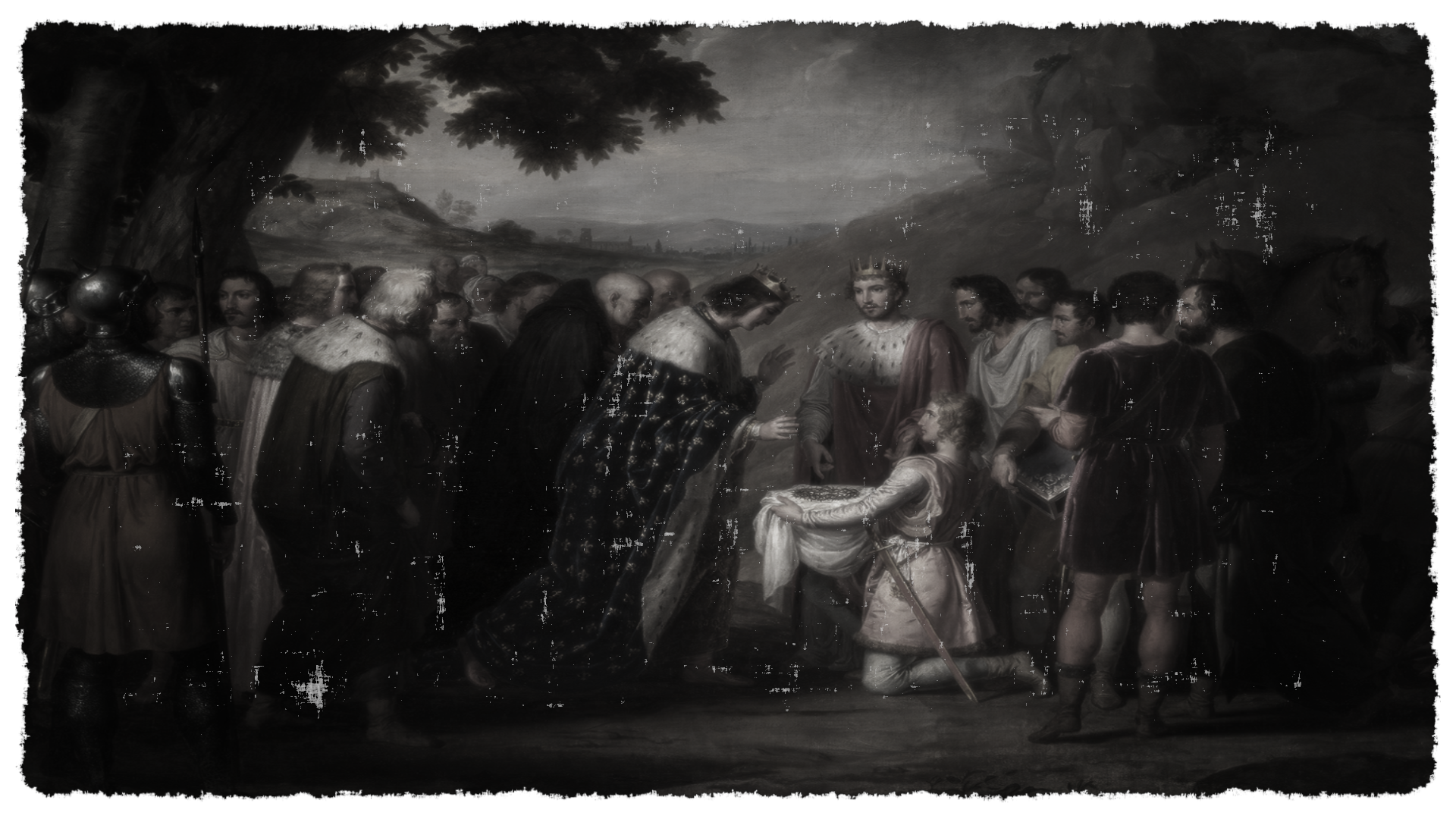
St. Louis IX governed a kingdom with real vigor. He reformed its laws, secured justice, and defended Christendom. Yet he never imagined that political success settled the question of where his kingdom’s claim on him ended and God’s began. He built hospitals and enforced tax law in the same years he fasted, prayed, and heard Mass daily. Nothing in his life suggests he ever discovered a formula that relieved him of prudence.
He ruled without either fleeing the throne or mistaking it for the altar. But he did not accomplish this by solving the problem once. He accomplished it by remaining within the tension of it, decision after decision, for forty years.
The disciple now knows what he must not do. He may neither flee from the political order nor attempt to redeem it through political power. Yet that still leaves the deeper question unanswered: What is politics itself for? What kind of common good can it truly secure, and how should the disciple pursue that good without ever forgetting the supernatural end for which man himself was made?
That is where this series turns next.
Subscribe to The Distant Shore so you don’t miss the weekly essays.
Editor's Note: This essay is the third in a four-part series exploring the relationship between the supernatural and temporal orders. Each essay develops a distinct aspect of the argument before a concluding architectonic essay draws the threads together into a broader theological synthesis.