

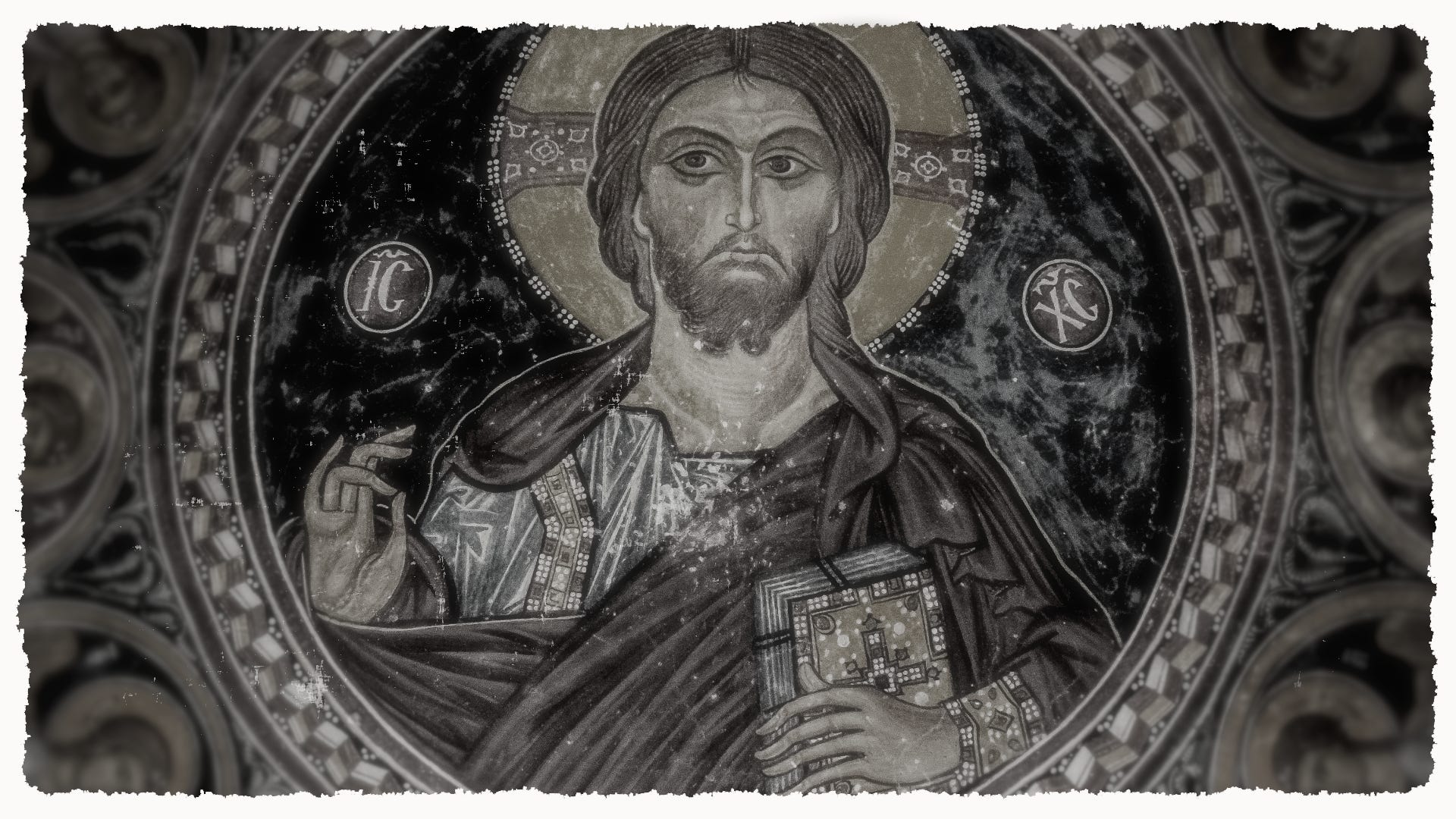
A crowd once tried to make Christ king by force. After the multiplication of the loaves, the political utility of a miracle worker with popular support became obvious to everyone but Him. He withdrew to the mountain alone. John records it in a single sentence (John 6:15). The drama belonged to the crowd, not to Christ. They wanted a ruler on their own terms. He refused conscription.
Every age is tempted to receive Christ only after first remaking Him in its own image.
Some discover Christ defending the poor. Others find Him defending order, or protecting freedom against coercion. Each begins with something genuinely present in the Gospel. The mistake comes when a fragment is mistaken for the whole, and Christ is quietly enlisted in the service of a political cause.
The issue is not whether one political movement resembles Christian teaching more closely than another on particular questions. Political platforms can and should be judged morally. The deeper question is whether Jesus Christ can be identified with any political movement at all.
He cannot.
A Kingdom Unlike Every Other
Standing before Pontius Pilate, Christ declared, “My kingdom is not of this world” (John 18:36).
This was not a denial that His kingdom had already broken into history. It was a declaration that it belongs to a different order. The temporal order exists for goods that are real but passing. Christ came to establish a kingdom ordered to man’s eternal end. For that reason, He does not compete with Caesar for the same office. Caesar governs the temporal order. Christ reigns over all creation.
Thus, in his encyclical Quas Primas, Pius XI taught that even rulers and nations stand beneath Christ’s kingship. No political order possesses Him. Every political order is judged by Him.
The Gospel does not conform to our politics because the temporal order does not judge the supernatural order; the supernatural order judges the temporal one.
The Faithful’s First Allegiance
Christ extends the same pattern to His disciples: they are in the world, but not of the world (John 17:11, 16).
The faithful vote, work, raise families, serve in public office, and seek the common good. None of this is foreign to Christian life. But none of it is their highest end. They belong first to a kingdom whose fulfillment no election can accomplish.
Civil authority serves the temporal order. Christ came to establish the kingdom of God. The first seeks the peace proper to this life; the second prepares us for the life to come.
Christ Himself names the Christian’s highest allegiance: “Thou shalt love the Lord thy God with thy whole heart, and with thy whole soul, and with thy whole mind,” and “Thou shalt love thy neighbor as thyself” (Matthew 22:37, 39). Every other duty takes its proper place beneath these two commandments.
That is why Caesar does not simply rank below God. He belongs to a different order altogether. The early martyrs accepted death rather than surrender this truth. They rendered to Caesar what was Caesar’s, but they would not render to Caesar what belonged to God.
To deny that Christ belongs to a political party is not to claim that all parties are morally equivalent. The Church distinguishes between moral principles, which bind every conscience, and prudential judgments, on which the faithful may legitimately disagree. The direct killing of the innocent belongs to the first; questions such as tax policy or immigration structures ordinarily belong to the second. No political movement can become the measure of the Gospel.
The Ballot Is Not the Kingdom
Christians therefore participate in political life as sojourners in this valley of tears, without mistaking it for the kingdom where every tear will be wiped away (Rev. 21:4).
Some ages have sought to draft Christ into their causes. Others have sought to erase Him altogether. Both refuse to receive His kingdom on its own terms, confusing the temporal order with the supernatural one.
The kingdoms of this world rise and fall because they belong to a passing order. Christ’s kingdom belongs to the supernatural order.
When the last election has been forgotten, the last empire has crumbled, and the last political platform has vanished with the age that produced it, the Kingdom of God will remain. For “of His kingdom there shall be no end” (Luke 1:33).
Subscribe to The Distant Shore so you don’t miss the weekly essays.
Editor's Note: This essay is the first in a four-part series exploring the relationship between the supernatural and temporal orders. Each essay develops a distinct aspect of the argument before a concluding architectonic essay draws the threads together into a broader theological synthesis.