
No one has ever been conceived as Jesus Christ was. And no one has ever departed this world as He did.
His earthly life began with a conception unlike any other and culminated in a Resurrection and Ascension unlike any other. Between these extraordinary events, He lived a genuinely human life. He knew hunger and fatigue, friendship and sorrow. He suffered and died.
As explained in Why Is Mary Called the Mother of God?, the One who entered the world was already the eternal Son of God. His human life had a beginning; His divine Person did not.
Yet the man who experienced all these things could say, “I came from the Father and have come into the world; again, I am leaving the world and going to the Father” (John 16:28).
What, then, does His extraordinary beginning reveal about Him?
The Beginning of a New Creation
The first man did not enter the world through ordinary human generation. Adam owed his existence to a special act of God. With him, human history began.
St. Paul calls Jesus Christ the “last Adam” (1 Corinthians 15:45). Through the first Adam, sin and death entered human history. Through Christ, humanity receives redemption and the promise of everlasting life.
At the beginning, God brought man into existence. To restore fallen humanity, God entered human history Himself. Neither the beginning of the human race nor its redemption could be accomplished by humanity’s own power.
The Incarnation is God’s act upon nature, not nature’s achievement.
Consider how the angel Gabriel describes what will happen to Mary. When she asks how she can conceive while remaining a virgin, he answers: “The Holy Spirit will come upon you, and the power of the Most High will overshadow you” (Luke 1:35).
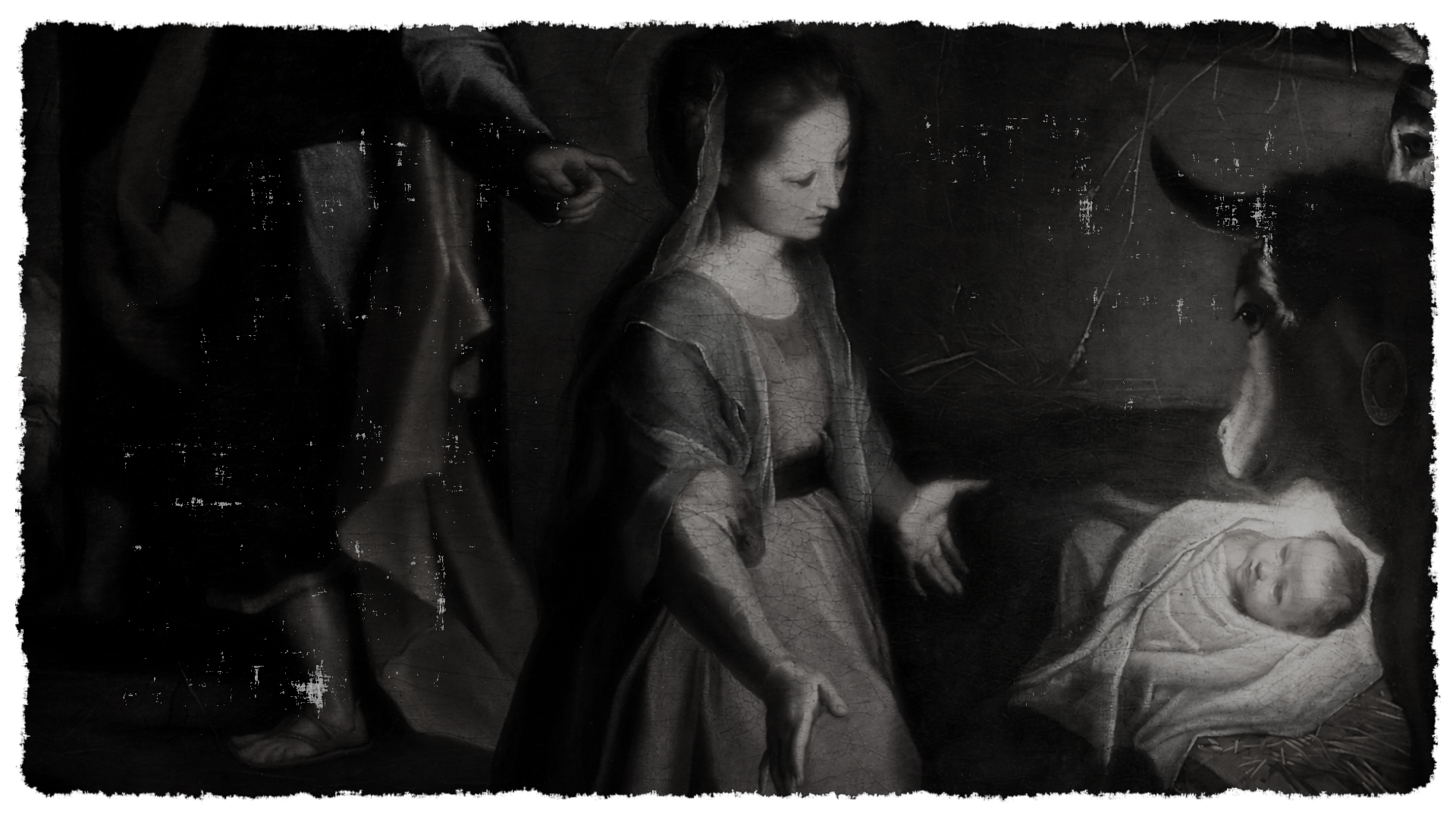
The supernatural act Gabriel announces will take place in and with Mary herself. She will conceive and bear a son. The eternal Word will receive from her a complete human nature, possessing a real human body and rational soul.
We can speculate endlessly about the different ways God might have entered human history, but speculation only reflects the limits of our own minds. In theology, our source is not our own intellectual invention; it is God’s actual work, flowing from His perfect wisdom. God chose Mary, and that choice means something.
Had God simply created a human nature for His Son independently of Mary, Christ would have possessed genuine humanity, but He would not have shared our ancestry. He would have resembled the descendants of Adam without actually being one of them. And if He had merely appeared in human form, He would not even have assumed our nature.
But God did neither. Through Mary, the eternal Son received the flesh and blood of Adam’s descendants. He entered the very human race He came to redeem. This is one profound reason for God’s choice of Mary: through her, Christ is truly the New Adam because He genuinely belongs to the human race descended from the first.
To deny that Christ received His humanity from Mary would therefore mean losing something essential to the Incarnation as God actually accomplished it: the real bond of ancestry between the Redeemer and those He came to redeem.
A further mystery lies in the manner of His conception. The Son is eternally begotten of the Father, without beginning. His divine Person has no human father. Yet in Mary’s womb, He begins a genuinely human life, receiving His human nature from her through the power of the Holy Spirit.
How fitting that the eternal Son should enter the world in this way. His virginal conception reveals both His eternal Sonship and His genuine membership in the human family. The Person is divine and eternal; the humanity He receives from Mary is truly ours.
The new creation, like the first, begins with a work that only God can accomplish.
The One Who Came from the Father
Christ entered the world through a virginal conception. He died and rose again by His own divine power. Then He ascended into heaven, returning to the Father from whom He is eternally begotten.
The infant carried in Mary’s womb is the eternal Son through whom the universe was created. The man who hungered in the wilderness is the One who gives life to every living thing. The man who died upon the Cross is the Lord of life, who conquered death.
Consider these truths together. The Creator entered His creation and lived within the conditions of the human nature He had made, without ceasing for a moment to be God.
The virginal conception is the first sign of who He is. A woman conceives without a human husband because the Person she bears is eternally generated from the Father.
The Son who came from the Father has become one of us. He did not pass through our nature or wear it like a garment. He received it from Mary, and He keeps it forever.
A human life began in Mary’s womb. The One who lives it never began at all.
Subscribe to The Distant Shore so you don’t miss the weekly essays.
Editor’s Note: This is the second essay in a four-part series exploring the significance of Mary’s unique place in the Incarnation. The series considers her divine maternity, the Virgin Birth, her intercession, and her continuing place in the life of the Church, all beginning from a simple truth: God chose Mary, and that choice means something.